Pet Care
Puppy Feeding and Potty Schedule by Age: Easy Routines
Free puppy feeding and potty schedule by age, print it, stick it on the fridge, and start sleeping through the night again.
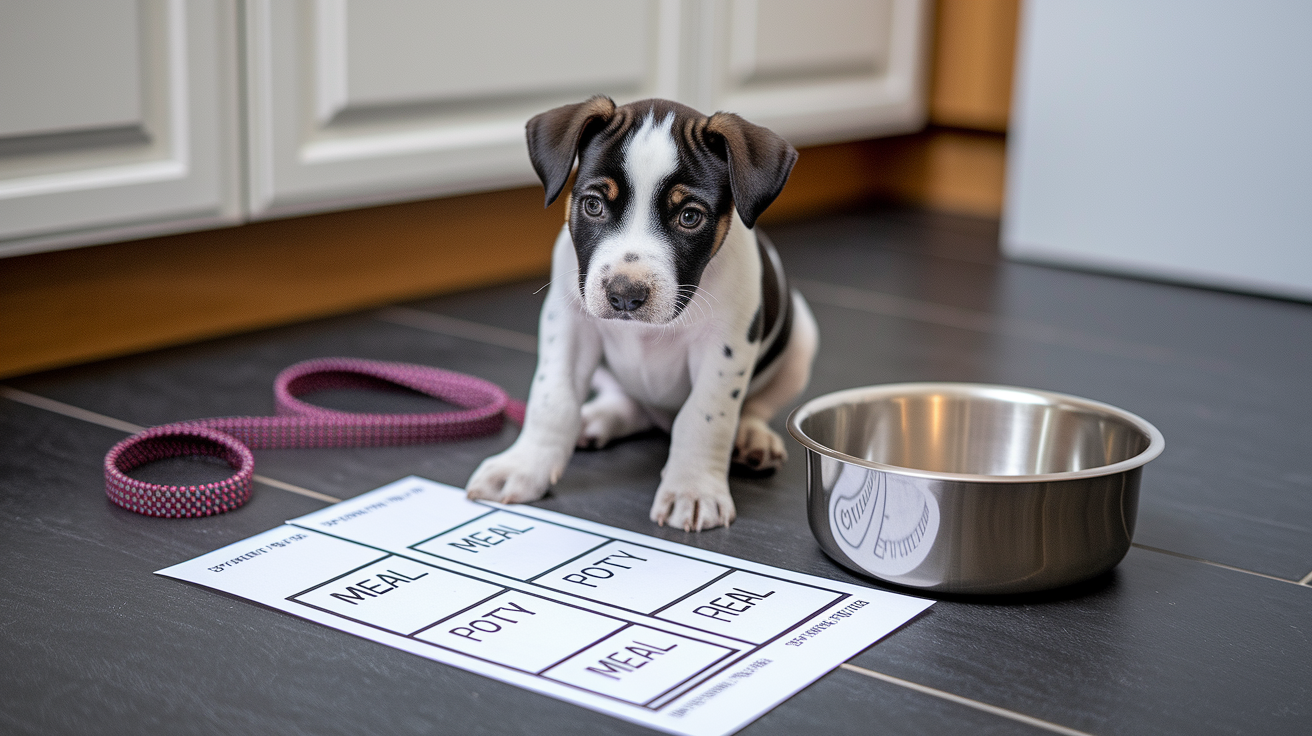
Think your new puppy can sleep through the night right away? Think again.
Do this today: print the chart and stick it on the fridge.
You’ll get clear meal times, portion rules, and simple potty intervals for each age: 8-12 weeks, 12-16 weeks, 4-6 months, and 6+ months.
Follow event-based trips (after waking, after meals, after play, after naps, before bed).
This post gives easy, step-by-step routines and what to watch for so your pup, and your sleep, improve fast.
Quick Coordinated Schedule For Each Puppy Growth Stage
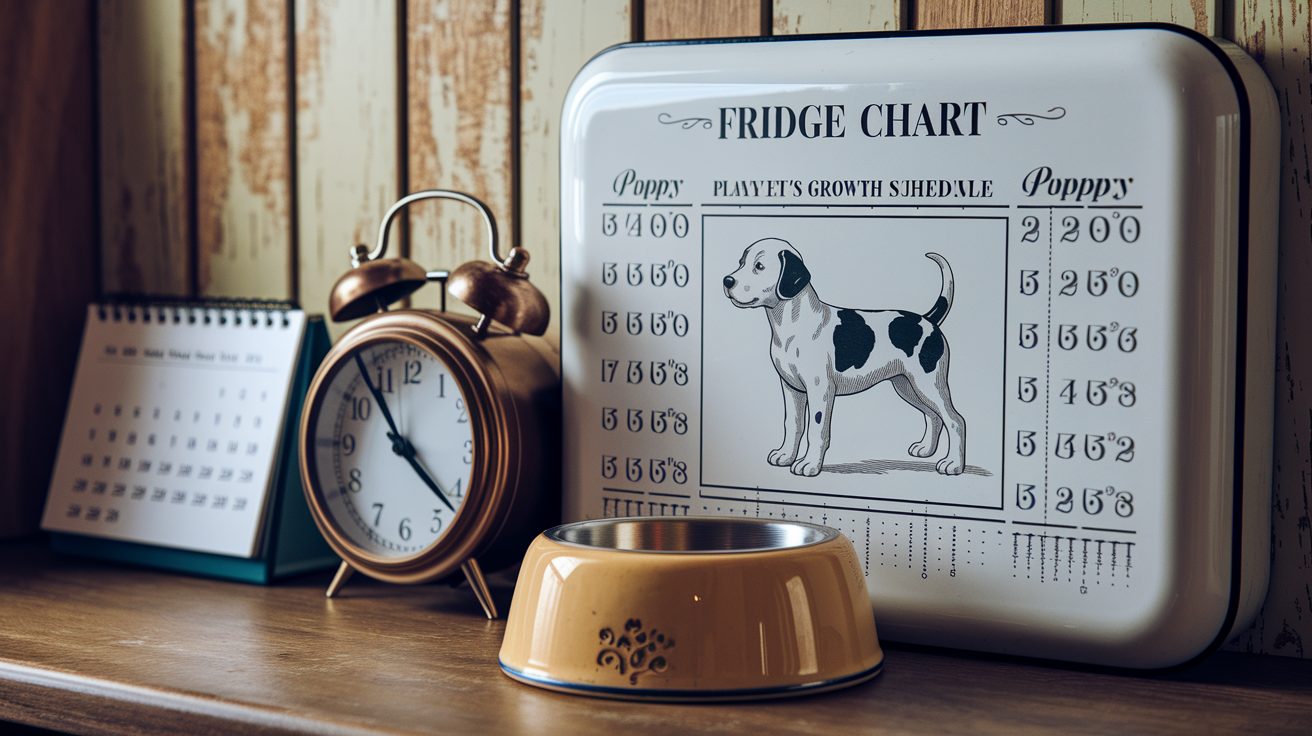
| Age | Meals Per Day | Sample Meal Times | How To Calculate Each Portion | Routine Potty Interval | Required Potty Trips | Nighttime Expectation |
|---|---|---|---|---|---|---|
| 8 to 12 weeks | 4 meals | 07:00, 12:00, 17:00, 21:00 | Daily calorie target divided by calories per cup/gram, then divided by 4 | Every 2 to 3 hours while awake | On waking, 5 to 30 minutes after meals, after play, after naps, before bed | Possibly one or more nighttime trips |
| 12 to 16 weeks | 3 to 4 meals | 07:00, 12:30, 17:30, optional 21:30 | Daily calorie target divided by calories per cup/gram, then divided by 3 or 4 | Every 3 to 4 hours while awake | On waking, 5 to 30 minutes after meals, after play, after naps, before bed | Possibly one nighttime trip |
| 4 to 6 months | 3 meals | 07:00, 13:00, 18:00 | Daily calorie target divided by calories per cup/gram, then divided by 3 | Up to 4 to 6 hours while awake, shorter when active | On waking, 5 to 30 minutes after meals, after play, after naps, before bed | Gradually fewer nighttime trips for many puppies |
| 6+ months | 2 meals | 07:00, 18:00 | Daily calorie target divided by calories per cup/gram, then divided by 2 | Regular daytime breaks still needed | On waking, 5 to 30 minutes after meals, after play, after naps, before bed | Many can manage 6 to 8 hours overnight |
Print this chart, stick it on your fridge, and use it as your starting point. No matter which row fits your pup right now, those event based trips (after waking, after meals, after play, after naps, before bed) aren’t optional. They matter more than whatever the clock says.
Age changes almost everything about a growing puppy’s routine. A tiny stomach can only hold so much at once, so younger pups need smaller meals more often. Bladder control develops slowly too, which is why an 8 week old puppy’s feeding schedule looks nothing like what you’d use for a 6 month old. Sleep patterns shift as well. Older puppies can naturally stretch the hours between bathroom trips, both day and night.
Treat this chart as a map, not a rulebook. Your puppy’s breed size, body condition, activity level, health, and your vet’s specific advice should shape the final version you actually use. If your pup keeps asking to go out sooner than the chart predicts, or leaves food in the bowl at mealtime, that’s telling you something. Adjust the routine based on what you’re seeing at home, not just the numbers on a page.
Feeding Frequency And Portion Reference By Age
(((alt-img2)))
As puppies grow, they need fewer meals spread across the day. But the total amount of food depends on calorie needs, not age alone. A puppy meal and bathroom routine should start with “how much” before you lock in “how often.”
Here’s how to work out portions:
- Get a daily calorie target from your vet based on current weight, expected adult size, body condition, health, and growth stage.
- Check the food package for calories per cup, can, tray, or gram. This varies a lot between brands.
- Convert that daily calorie target into a total food amount using the package’s calorie density.
- Subtract calories from treats, then divide what’s left into the right number of meals for your puppy’s age.
Meals per day by age typically breaks down like this:
- 8 to 12 weeks: 4 meals, roughly at 07:00, 12:00, 17:00, and 21:00
- 12 to 16 weeks: 3 to 4 meals, roughly at 07:00, 12:30, 17:30, with an optional 21:30 feeding
- 4 to 6 months: 3 meals, roughly at 07:00, 13:00, and 18:00
- 6+ months: 2 meals, roughly at 07:00 and 18:00
You can shift these times earlier or later to fit your household. What matters more is keeping the spacing between meals fairly consistent, since that keeps your puppy’s digestion (and your potty timing) predictable.
Don’t change meal frequency overnight. The move from 4 to 3 meals usually happens somewhere between 12 and 16 weeks. The move from 3 to 2 typically happens around 6 months. Either way, spread the change over 1 to 2 weeks by slowly redistributing food from the meal you’re dropping into the remaining meals. Watch appetite, stool quality, energy, body condition, and weight closely during the switch. If something seems off, like loose stool that won’t clear up or a sudden drop in appetite, pause and check in with your vet before pushing forward.
Potty Frequency, Holding Limits, And Bathroom Cues
(((alt-img3)))
A commonly used estimate for bladder holding time is the puppy’s age in months plus one hour. That works out to roughly 3 hours at 2 months, 4 hours at 3
Final Words
In the action, this post gives ready-to-print charts and routines for 8–12 weeks, 12–16 weeks, 4–6 months, and 6+ months—meals, sample times, portion math, and potty trips tied to waking, meals, naps, play, and bedtime.
We covered holding estimates, bathroom cues, breed and nighttime adjustments, and how to move from four to three to two meals. Use the troubleshooting tips if your puppy seems hungry, leaves food, has loose stool, or has accidents.
Use this puppy feeding and potty schedule by age as a starting plan: print it, track seven days, and tweak with your vet. Small, steady steps pay off—soon it’ll feel like part of your routine.
FAQ
Q: At what month should my puppy be potty trained?
A: Puppies are often reliably potty trained for daytime between 4–6 months, though some reach it earlier or later; start predictable trips and ask your vet if accidents persist.
Q: What is a typical sleep schedule for a 16-week-old puppy?
A: A typical 16-week-old puppy sleeps about 12–16 hours daily, spread across several naps, and usually manages 5–7 hours overnight but may still wake once for a bathroom trip.
Q: What is the recommended feeding schedule for puppies?
A: The recommended feeding schedule for puppies changes with age: 8–12 weeks four meals, 12–16 weeks three to four, 4–6 months three, and 6+ months usually two meals per day.
Q: Should a puppy always nap in a crate?
A: A puppy should not always nap in a crate; crate naps are useful for safe, calm rest and housetraining, but supervised naps elsewhere are fine—avoid long, unsupervised confinement.
More from Politics
 Training
Teach a Dog to Walk on a Loose Leash Indoors
 Health
Cat Not Eating Checklist: Quick Troubleshooting Steps
 Pet Products
Self-Cleaning Litter Box vs Manual: Which Wins?
 Pet Lifestyle