Training
How to Stop Puppy Biting and Mouthing Fast
How to stop puppy biting and mouthing fast: freeze, swap in a chew toy, praise, pause if needed. Simple steps you can start using today.
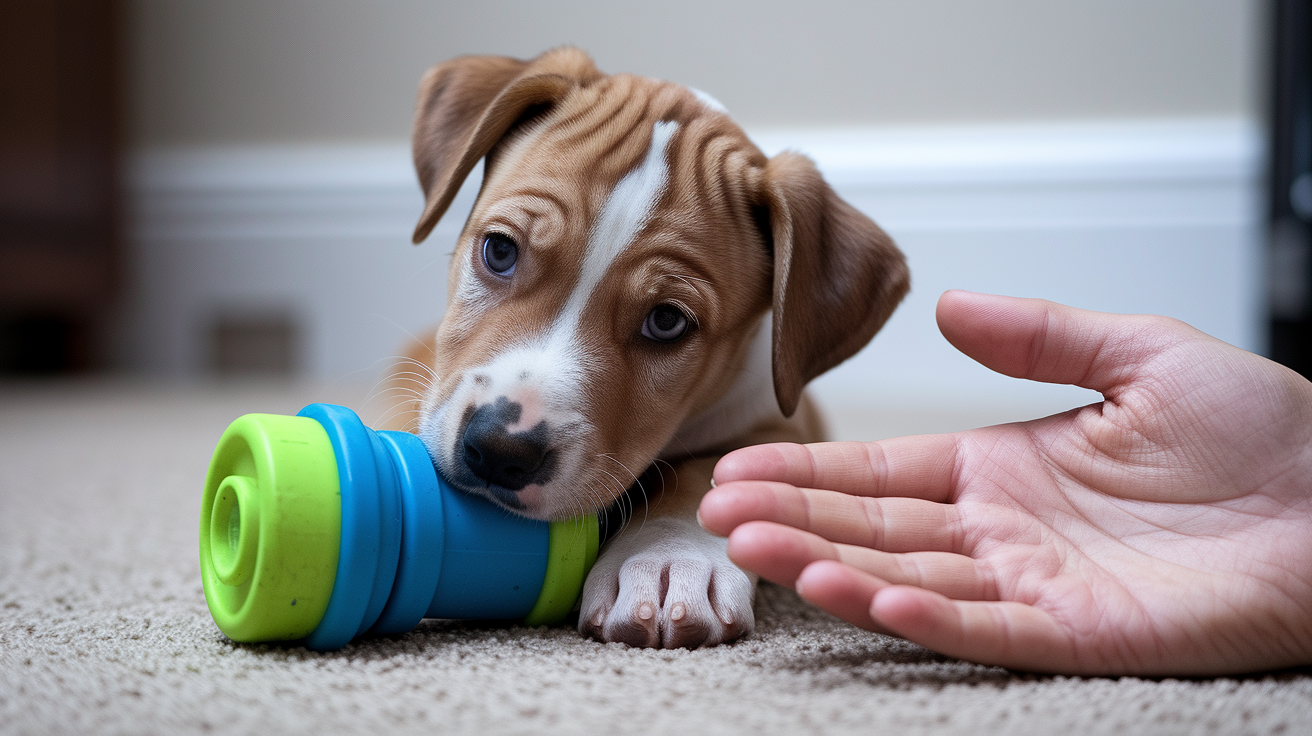
Is your puppy treating your hands like chew toys every time you bend down?
Stop it fast with a few simple moves you can use today: freeze when teeth touch, offer a chew toy, praise the swap, then pause play for 10–30 seconds if biting continues.
This post shows that exact, repeatable sequence, the timeline to expect, common mistakes that slow progress, and when to call a trainer or vet.
Do these steps consistently and you’ll usually see a real drop in mouthing within 1–2 weeks.
Immediate Steps for Puppy Nipping
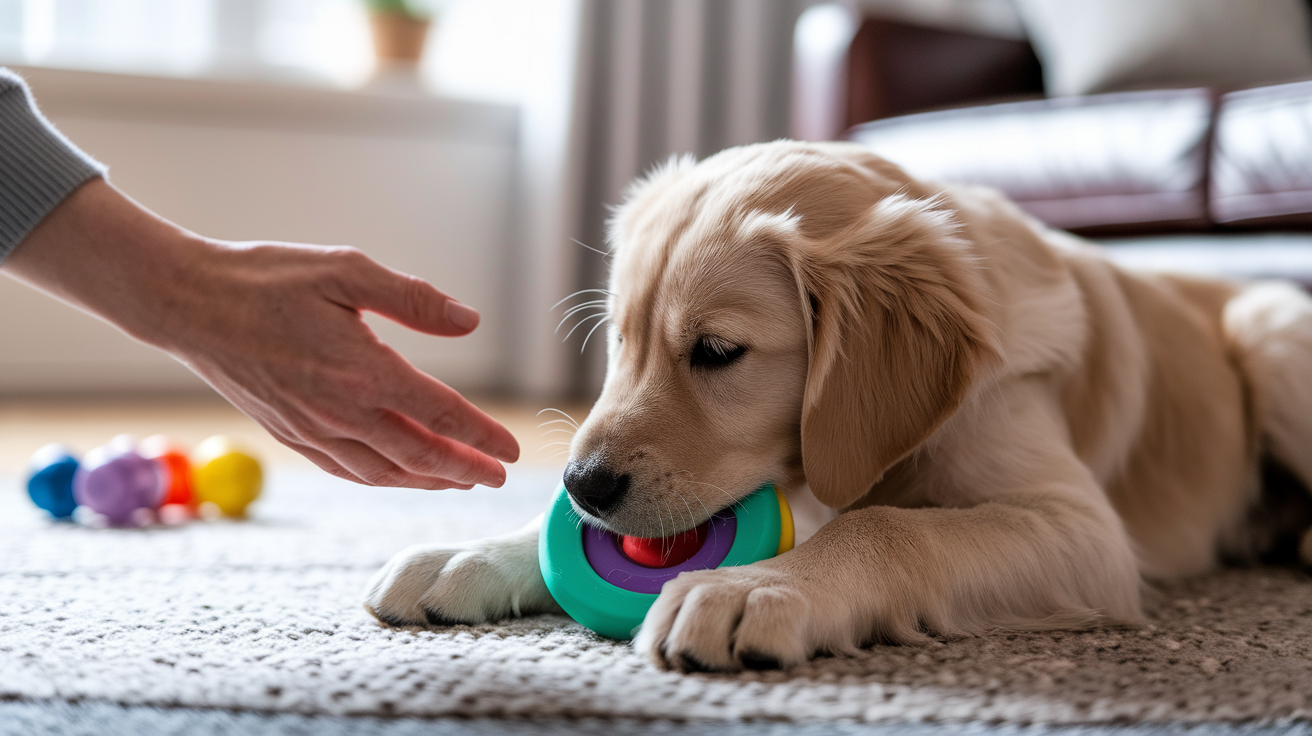
- Freeze the hand or body part instead of pulling away.
- Calmly redirect the puppy to an appropriate chew toy, like a rubber puppy toy, soft tug toy, or puppy-safe teething ring.
- Praise the puppy as soon as it bites or holds the toy.
- End play and withdraw attention for 10 to 30 seconds if biting continues.
- Offer a quiet break or nap when biting looks frantic or the puppy seems overstimulated.
This sequence works because it takes away the two things that fuel puppy biting most: movement and reward. A puppy chases what moves, so freezing your hand kills the fun instantly. Redirecting to a toy gives those sharp teeth somewhere else to land, and praising the second they grab it tells them exactly what you want more of.
Every person in the house needs to use the same cue, the same redirection, and the same response when biting keeps happening. If one person laughs and waves their hands around while another freezes and pulls back attention, your puppy gets mixed signals and the learning slows way down. Think of it like teaching a toddler table manners. If one adult allows snacking before dinner and another doesn’t, the kid never quite figures out the rule. Puppies work the same way. Consistency from everyone, kids and visitors included, is what actually moves things forward.
So what’s a realistic timeline? Most owners notice a drop in how often or how hard their puppy bites within 1 to 2 weeks of consistent practice. But dependable, reliable bite inhibition, the kind where you barely think about it anymore, can take several weeks to a few months depending on your puppy’s age, where they’re at in teething, their temperament, and what they’ve already learned (or not learned) before coming home. If this feels slow, that’s normal. Mouthing is common puppy behavior, and it typically gets better steadily through a mix of maturation and the training you’re already doing.
Age matters quite a bit here, so adjust your approach as your puppy grows:
- Under 12 weeks: Use very brief training interactions, soft puppy-safe toys, frequent rest, and gentle redirection. Young pups tire out fast and need lots of nap time between lessons.
- Approximately 3 to 6 months: Provide extra teething outlets, rotate chew textures, and expect a temporary jump in mouthing as adult teeth come in. This bump isn’t usually a training failure, it’s just teeth.
- Over 6 months: Increase structured reinforcement and check for unmet exercise, rest, or training needs. Persistent hard biting at this age may call for professional support.
Pros and Cons of Different Bite Correction Methods
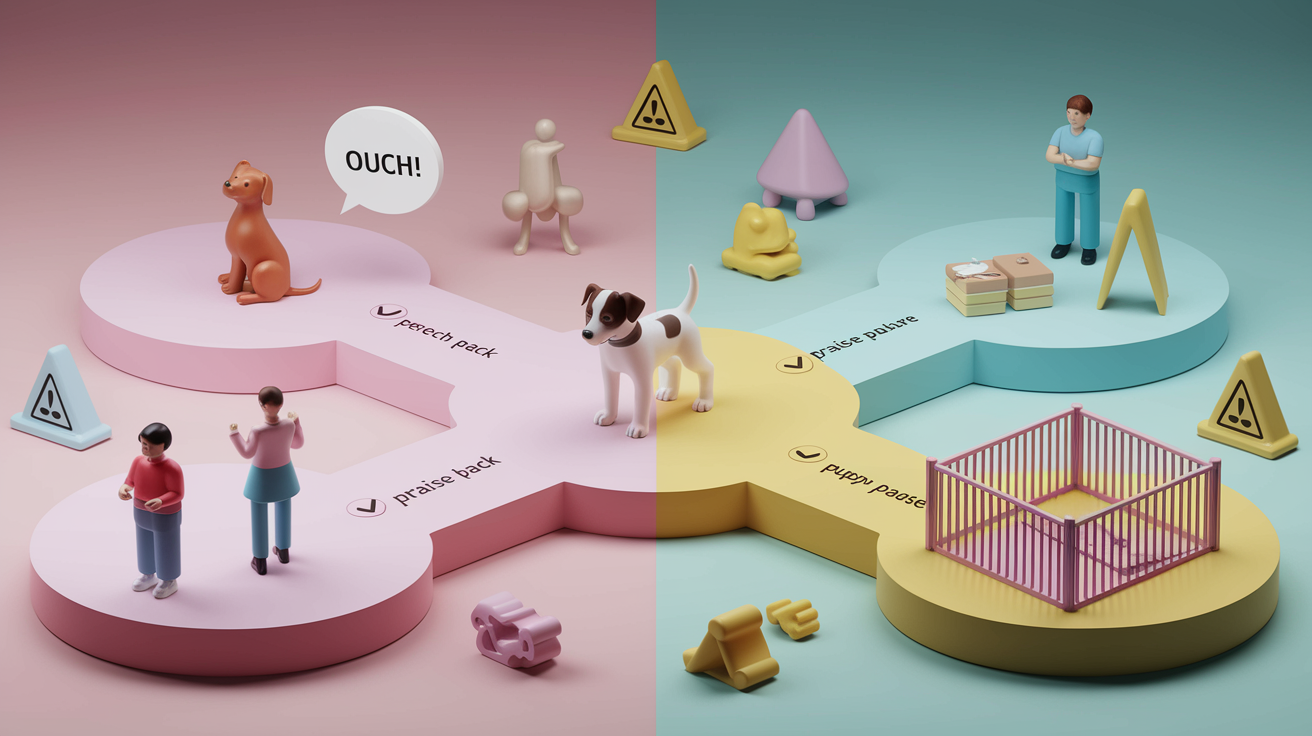
Not every method works the same way for every puppy, and that’s worth knowing before you settle on one. Some popular techniques actually backfire by ramping up excitement instead of calming things down, so if a method seems to be making the biting worse, that’s your cue to stop and try something else.
| Method | Pros | Cons |
|---|---|---|
| Yelp/”Ouch” Method | Mimics how a littermate would react to a hard bite; easy to do anywhere; no equipment needed | Can increase excitement and encourage more biting in some puppies, especially high-energy ones |
| Brief Disengagement | Teaches that biting ends the fun; calm and low-drama; works well paired with redirection | Needs to be brief and consistent or the puppy may not connect the pause to the bite |
| Positive Reinforcement | Builds trust, rewards the behavior you actually want, and works well long term | Requires good timing and patience; results build gradually rather than overnight |
| Ignoring the Behavior | Removes attention as a reward for mouthing; simple to apply during mild nipping | Not enough on its own for frantic or overstimulated biting; may need to be combined with a rest break |
Here’s the protocol that tends to work best for most puppies, combining redirection, reinforcement, brief disengagement, and rest:
- Freeze immediately when the puppy’s teeth touch skin or clothing.
- Present an appropriate toy close to the puppy without waving it around in an exciting way.
- Mark and praise engagement with the toy, then keep playing calmly.
- If the puppy goes back to biting, step away or end the interaction for 10 to 30 seconds.
- If biting keeps repeating, guide the puppy calmly to a quiet, puppy-safe area for rest or a nap.
Brief disengagement, just 10 to 30 seconds, works a lot better than a long time out, and it’s gentler too. The goal isn’t to isolate the puppy, it’s to interrupt the pattern. When biting keeps happening no matter what you try, it’s often a sign of fatigue rather than defiance, so a rest break actually addresses the real problem. A crate or pen should always stay a positive space for sleeping and settling, never a punishment. If your puppy starts connecting the crate with being in trouble, that creates a whole new problem you’ll have to untangle later.
A few common mistakes tend to slow progress or make biting worse. Jerking your hand away fast often triggers a chase response, since quick movement is exactly what puppies love to catch. Rough hand play teaches that hands are toys, which works against everything you’re trying to build. Inconsistent responses between household members, repeating the same cue without real follow through, and raising your voice all confuse the puppy instead of teaching it anything. And yelling, hitting, pushing the puppy away, or holding the muzzle shut aren’t recommended under any circumstance. These punishment based tactics can create fear or actually increase arousal, and none of them teach the puppy what they should be biting instead.
#
Final Words
Freeze your hand when teeth touch, offer a chew toy, praise the puppy for choosing the toy, and step away for 10 to 30 seconds if biting keeps up. Give quiet breaks when they’re frantic.
Keep everyone in the home using the same sequence. Expect noticeable improvement in 1–2 weeks, but full bite inhibition can take longer, especially with teething, breed traits, or limited littermate experience.
Use these simple steps to learn how to stop puppy biting and mouthing — calm, steady practice really pays off.
FAQ
Q: What dog breeds are prone to biting?
A: The dog breeds prone to biting are often those bred for herding, guarding, or high prey drive, such as some herding breeds, terriers, and guard-type dogs. Training and socialization matter most.
Q: What are red flag behaviors in puppies?
A: Red flag behaviors in puppies include repeated hard or puncture bites, freezing or stiffening, growling, guarding items, sudden aggression or avoidance, difficulty stopping the behavior, or changes that suggest pain or illness.
Q: What month is hardest with a puppy?
A: The month that’s hardest with a puppy is often around 3 to 4 months when teething starts and behavior shifts. Expect more mouthing and mood swings through about 3 to 6 months.
Q: How to discipline a puppy?
A: To discipline a puppy, freeze when teeth touch skin, calmly redirect to an approved chew toy, praise engagement, end play for 10–30 seconds if biting continues, and offer quiet breaks or naps.
More from Politics
 Training
Teach a Dog to Walk on a Loose Leash Indoors
 Health
Cat Not Eating Checklist: Quick Troubleshooting Steps
 Pet Products
Self-Cleaning Litter Box vs Manual: Which Wins?
 Pet Lifestyle