Pet Products
LED Collar vs Reflective Collar: Which Keeps Pets Safer at Night
LED collar vs reflective collar: which keeps your dog safer at night? See how they compare and why using both might be your best bet.
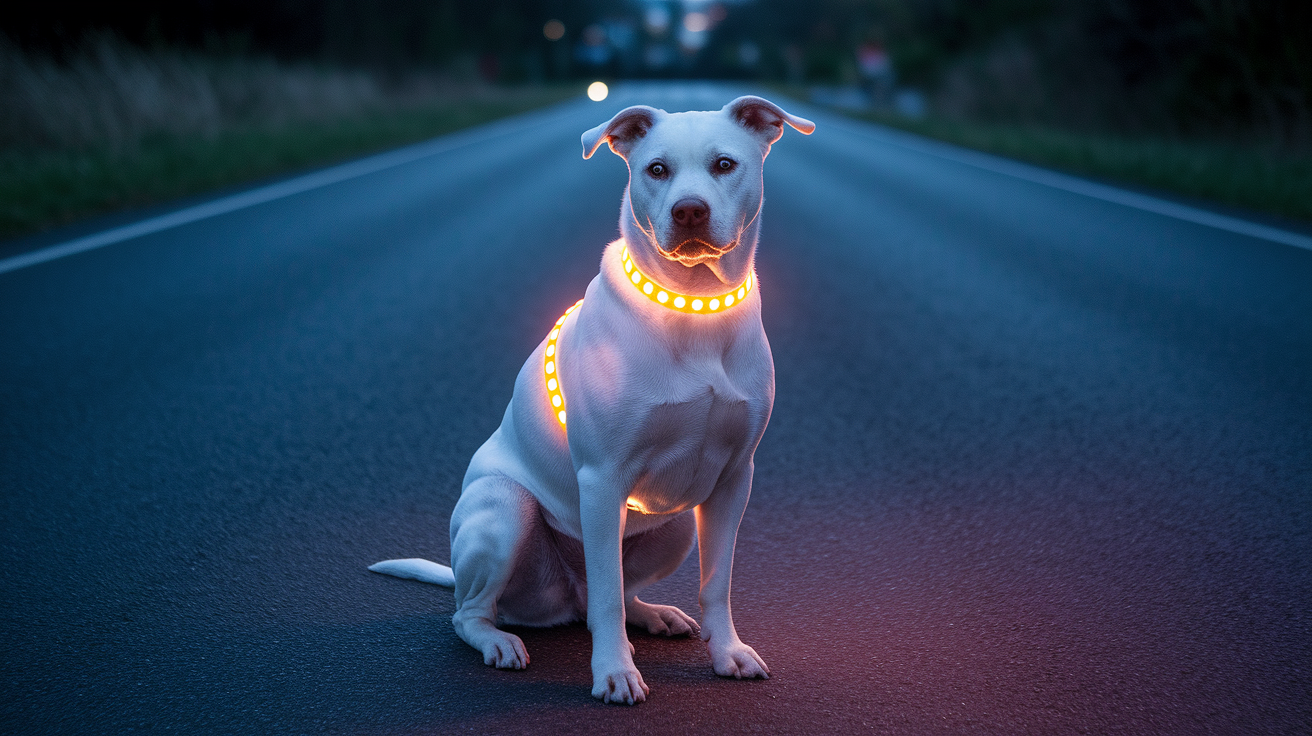
Think a reflective collar is enough to keep your dog safe at night?
Not always.
Reflective gear only shows up when headlights or streetlights hit it.
LED collars make their own light, so they’re easier to spot on dark roads and unlit trails.
Still, the smartest pick is both: an LED collar for constant glow plus reflective trim as a backup if the battery dies or fur covers the light.
Keep reading to see which option fits your walks and your budget.
LED Collar vs Reflective Collar Which Is Safer At Night: The Verdict
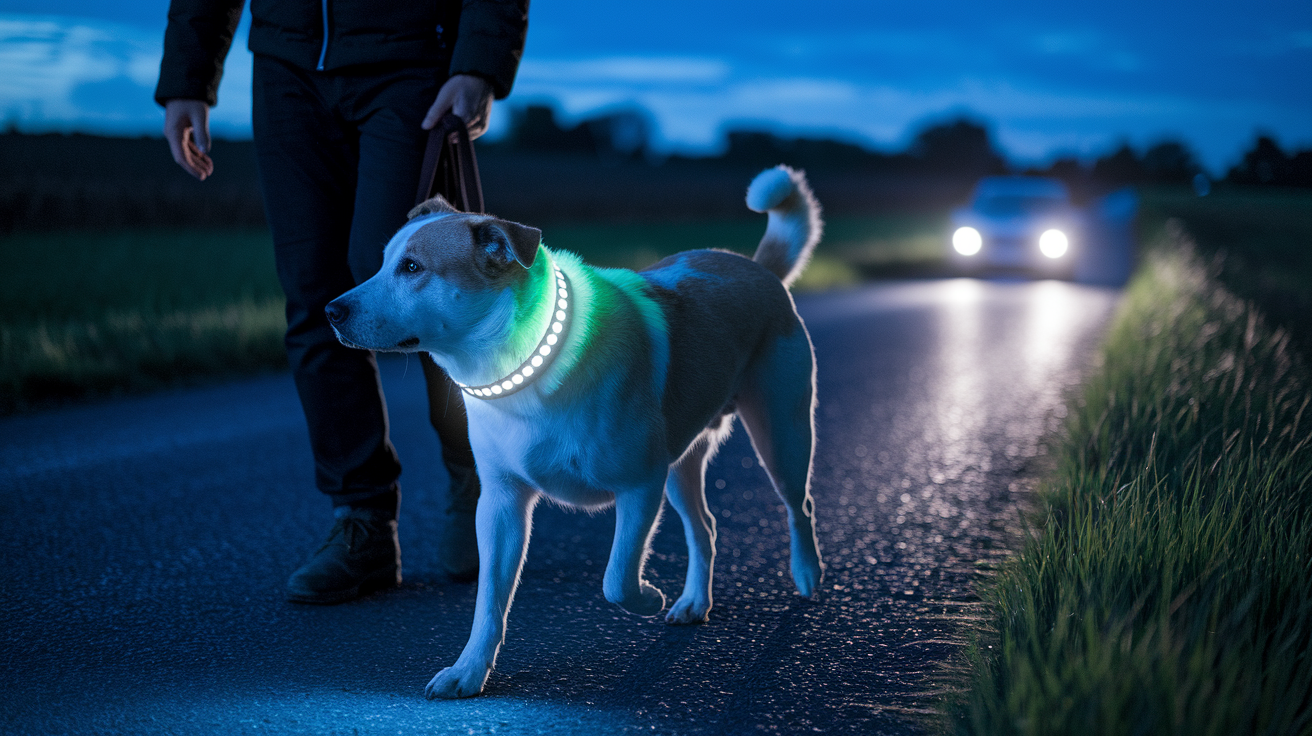
LED collars are generally safer at night because they create their own light. A reflective collar only works when something else lights it up first, like a car’s headlights or a streetlamp. No light source, no visibility, a reflective collar is basically invisible in the dark. An LED collar glows on its own in total darkness though, and that makes a real difference on quiet roads or unlit trails where nothing’s around to “activate” reflective material in the first place.
That said, the smartest setup isn’t picking one over the other. It’s combining both. An LED collar gives you that independent glow, while reflective trim adds a backup layer that still works if the LED battery dies mid-walk or the light gets blocked by your dog’s fur. Think of it like wearing a flashlight and a reflective vest on a run. One lights the way, the other catches stray light from any direction.
Here’s a quick breakdown of which option fits which situation:
- Rural or unlit areas: LED collar, since there’s no streetlight or headlight to “wake up” reflective trim.
- Well-lit urban streets: Reflective collar can work fine here, since streetlights and car headlights do the job of illuminating it.
- Budget-conscious owners: Reflective collar, since it’s cheaper and needs no batteries or charging.
- Best overall safety setup: A rechargeable LED collar paired with reflective trim, covering both active and passive visibility.
Now let’s get into exactly how each technology works, how far they’re visible, and what to look for before you buy.
How LED Collars And Reflective Collars Work
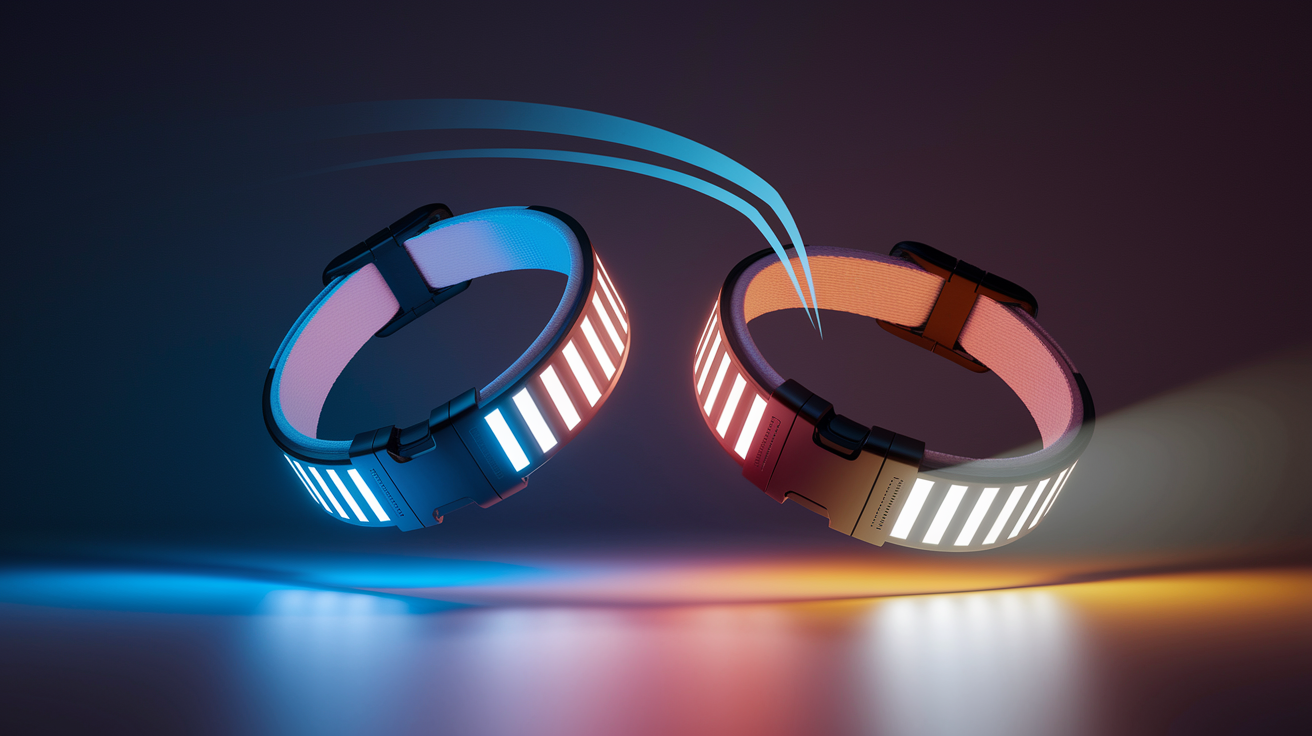
The core difference comes down to one thing: does the collar make its own light, or does it just bounce light back? Reflective collars rely on an outside light source. LED collars don’t need one at all. That single difference shapes almost everything else about how safe each option is in different conditions.
How Reflective Collars Work
Reflective collars use retroreflective tape or trim, material built to bounce light back toward wherever it came from. When a car’s headlights hit the collar, it lights up and sends that light back toward the driver’s eyes, making your dog noticeable for a moment. The catch is it only works when something’s actively shining light on it. No headlights, no streetlamp, no visibility.
Quality matters here too. Look for 3M-type reflective tape stitched into the collar rather than just glued on. Glued strips tend to peel and wear down faster, especially with regular walks and the occasional bath.
How LED Collars Work
LED collars have small lights built right into the material, usually powered by a battery or rechargeable module. They don’t wait for outside light. They just glow, either in a steady beam or a flashing pattern you can switch between.
Flashing mode tends to catch attention faster since movement draws the eye, which can help with driver reaction time in low light. Steady mode is more consistent and less distracting, but it may not stand out as quickly from a distance. Color matters too. White light is generally easier to spot at a distance, while red light preserves some of your own night vision if you’re walking without a flashlight.
Visibility Distance: LED Collar vs Reflective Collar
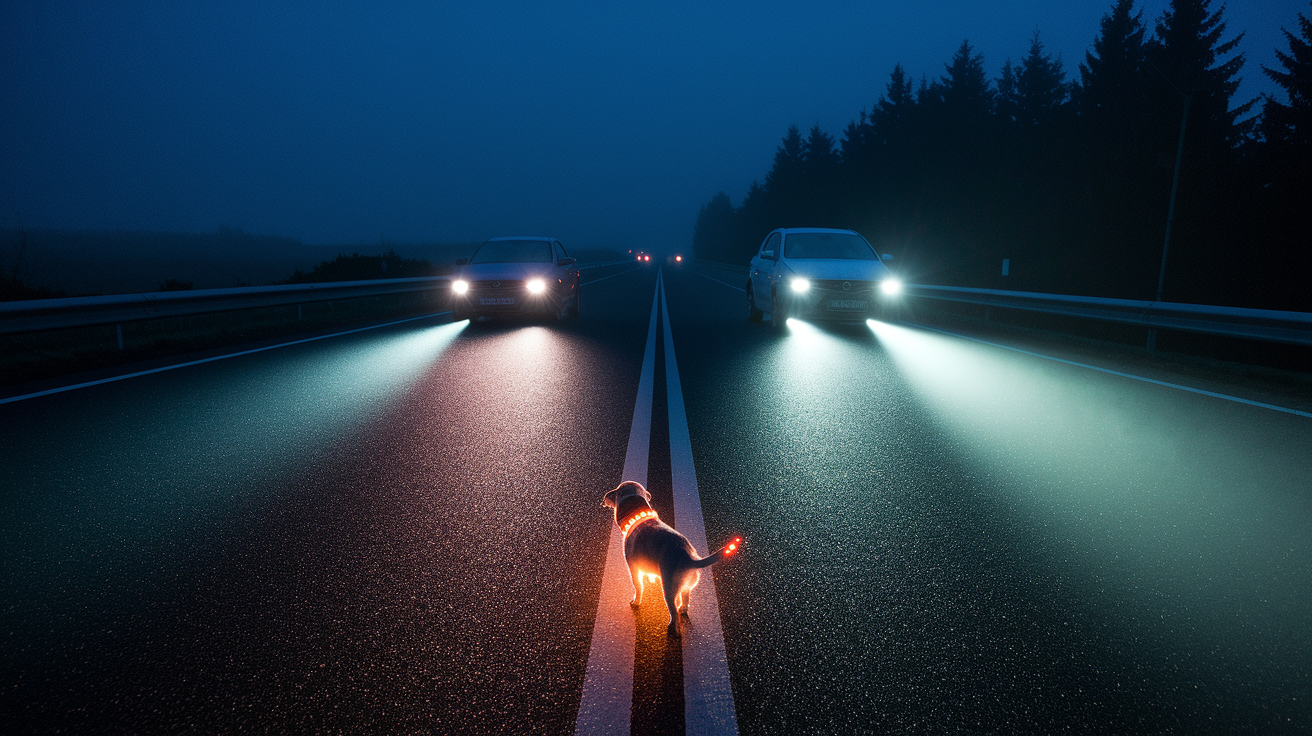
Visibility distance basically tells you how far away someone, usually a driver, can actually see your dog in the dark. The farther that distance, the more time a driver has to react. And that gap in reaction time is exactly why this comparison matters so much for safety.
| Collar Type | Visibility Range | Conditions Affecting Visibility |
|---|---|---|
| Reflective Collar | Roughly 50 to 200 meters (165 to 660 feet) when illuminated; near 0 without a light source | Needs headlights or streetlights to work; fades in fog, heavy rain, or when covered by fur |
| LED Collar | Roughly 30 to 300+ meters (100 to 1,000+ feet) depending on brightness and mode | Flashing mode and higher brightness extend range; still reduced in fog, heavy rain, or fur coverage |
Worth noting, neither option is flawless. Fog and heavy rain scatter light and shrink visibility for both collar types. And if your dog has a thick or long coat, even a bright LED collar can get partially swallowed by fur, so positioning matters just as much as the tech itself.
Battery Life And Power Requirements Compared
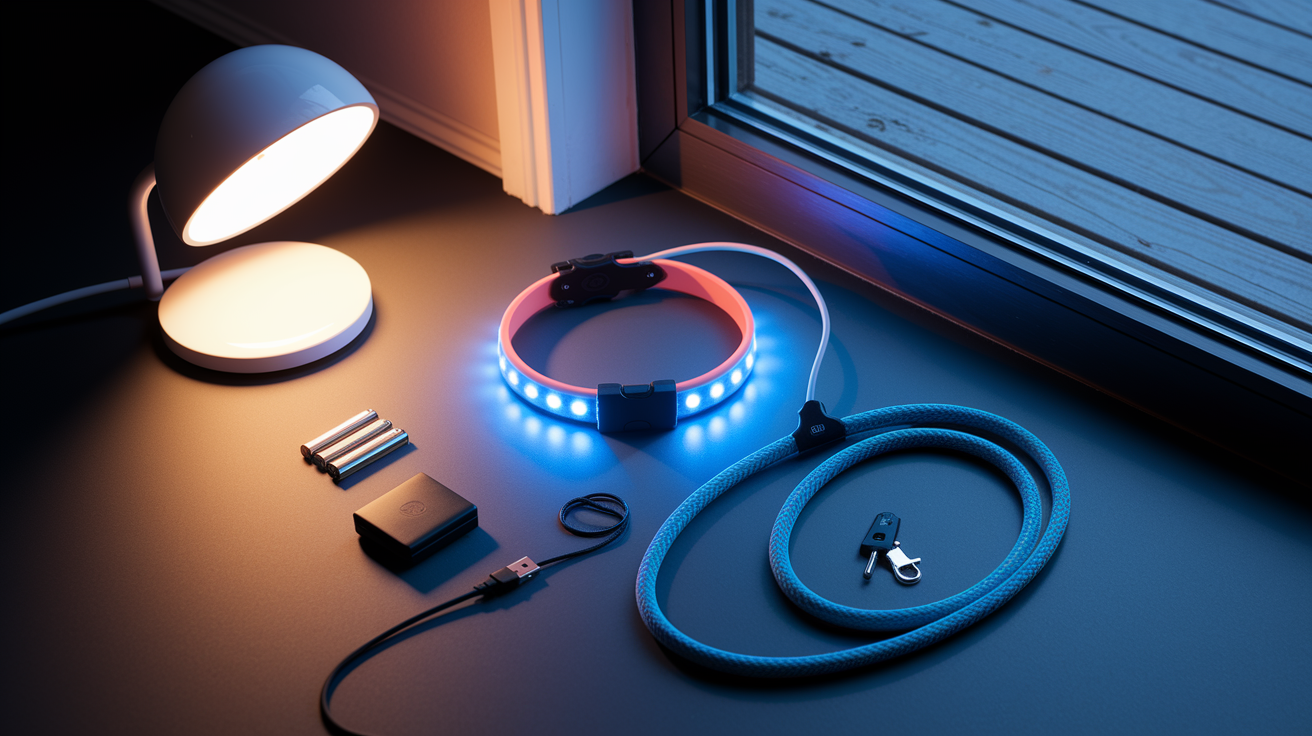
Reflective collars need exactly zero power. No batteries, no charging, nothing to think about before you head out the door. LED collars are the opposite. They need some kind of power source, and how long that power lasts depends heavily on what type of battery is inside.
Here’s how typical runtimes break down:
- Coin-cell flashing mode: 40 to 200+ hours, making it the longest-lasting option for occasional short walks.
- Coin-cell continuous mode: 8 to 24 hours, which drains faster since the light never switches off.
- Rechargeable continuous mode: 6 to 24 hours, with a full recharge usually taking 1 to 4 hours over USB.
- Rechargeable flashing mode: 24 to 72+ hours, giving you the most mileage between charges if you mostly use flash.
If this is new to you, that’s normal. A simple habit fixes most of it. Check your LED collar’s charge level before every evening walk, the same way you’d check your phone before leaving the house. And it doesn’t hurt to keep a spare coin battery or small portable charger in a drawer by the leash, just in case the light dies halfway through a walk.
Final Words
In the action, LED collars are generally safer because they make their own light. Reflective collars only work when hit by headlights or street lamps and can be near-invisible without external light.
Best step: use both: a rechargeable LED collar with stitched reflective trim for active glow plus passive backup.
Quick summary:
- Rural/unlit: bright rechargeable LED (flashing).
- Well-lit urban: reflective trim or low-power LED.
- Budget: quality reflective collar or coin-cell LED.
- Best overall: rechargeable LED + reflective trim.
Read the full LED collar vs reflective collar which is safer at night breakdown below.
FAQ
Q: Is it good to take your dog’s collar off at night?
A: Taking your dog’s collar off at night can be fine if your dog is indoors, supervised, and secure. Remove it during crating or unsupervised hours to prevent snagging. Keep ID on or ensure microchip info is current.
Q: Can dogs be around LED lights?
A: Dogs can be around LED lights, but avoid shining bright or flashing LEDs directly into their eyes. Use warm-color, low-glare lights and limit close, prolonged exposure, especially for puppies or dogs with eye problems.
Q: Is there a dog collar that lights up at night?
A: Yes, there are dog collars that light up at night. Rechargeable LED collars offer steady or flashing modes, 6–24+ hour runtimes, and water resistance; pair with reflective trim for extra backup visibility.
Q: Are vibrating collars ok for dogs?
A: Vibrating collars can be okay for dogs when used correctly as a no-shock training tool or for deaf dogs. Use low settings, avoid with highly anxious or aggressive dogs, and consult a trainer or vet if unsure.
More from Politics
 Training
Teach a Dog to Walk on a Loose Leash Indoors
 Health
Cat Not Eating Checklist: Quick Troubleshooting Steps
 Pet Products
Self-Cleaning Litter Box vs Manual: Which Wins?
 Pet Lifestyle