Pet Care
Kitten Feeding Schedule by Age: Complete Timeline
Not sure what to feed your kitten and when? Get the age-by-age kitten feeding schedule, with amounts and timing, so you can stop guessing today.
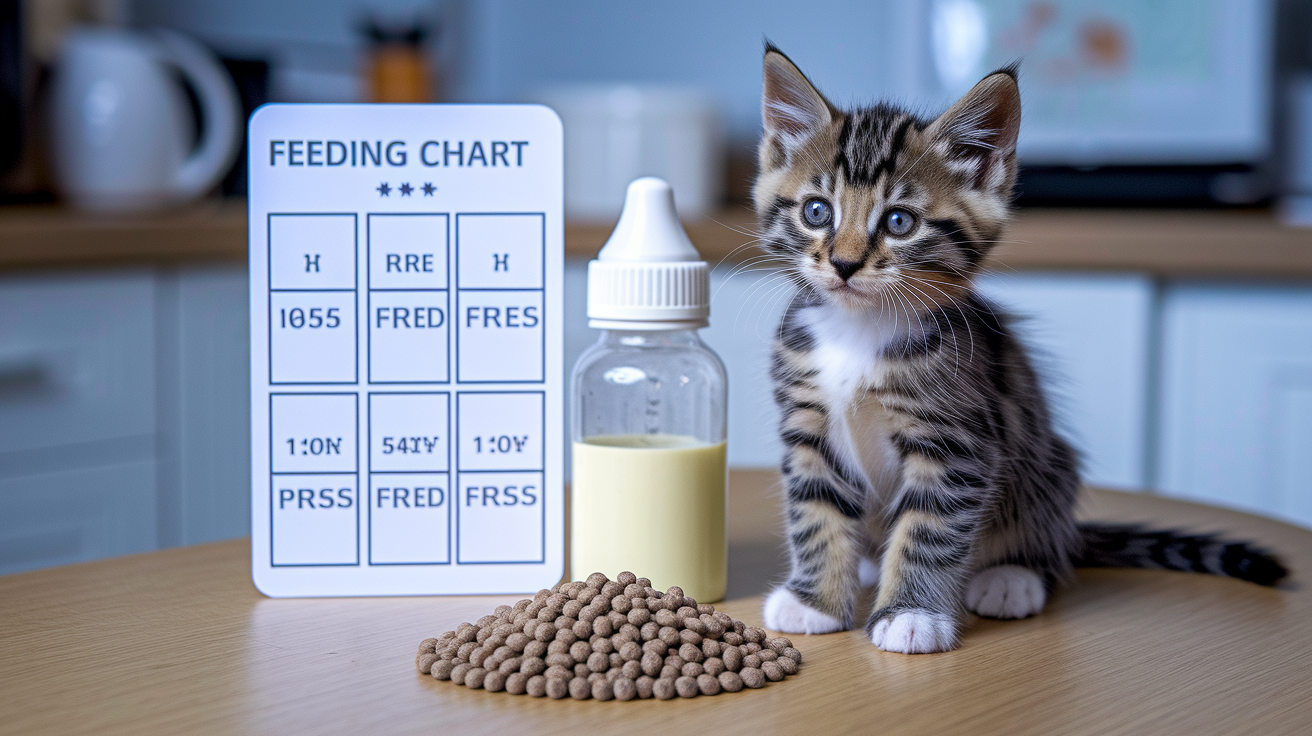
Think feeding a kitten is just “give more food more often”? Not true — that can slow growth or upset tummies.
First, check your kitten’s exact age; that alone tells you whether they need milk, gruel, or solid food.
This guide gives a clear, age-by-age feeding timeline: the right food type, how often to feed, and roughly how much for each stage.
Use the quick reference chart and the simple daily steps here to stop guessing and feed with confidence from newborn bottles to two meals a day.
Kitten Feeding Schedule By Age: Quick Reference Chart
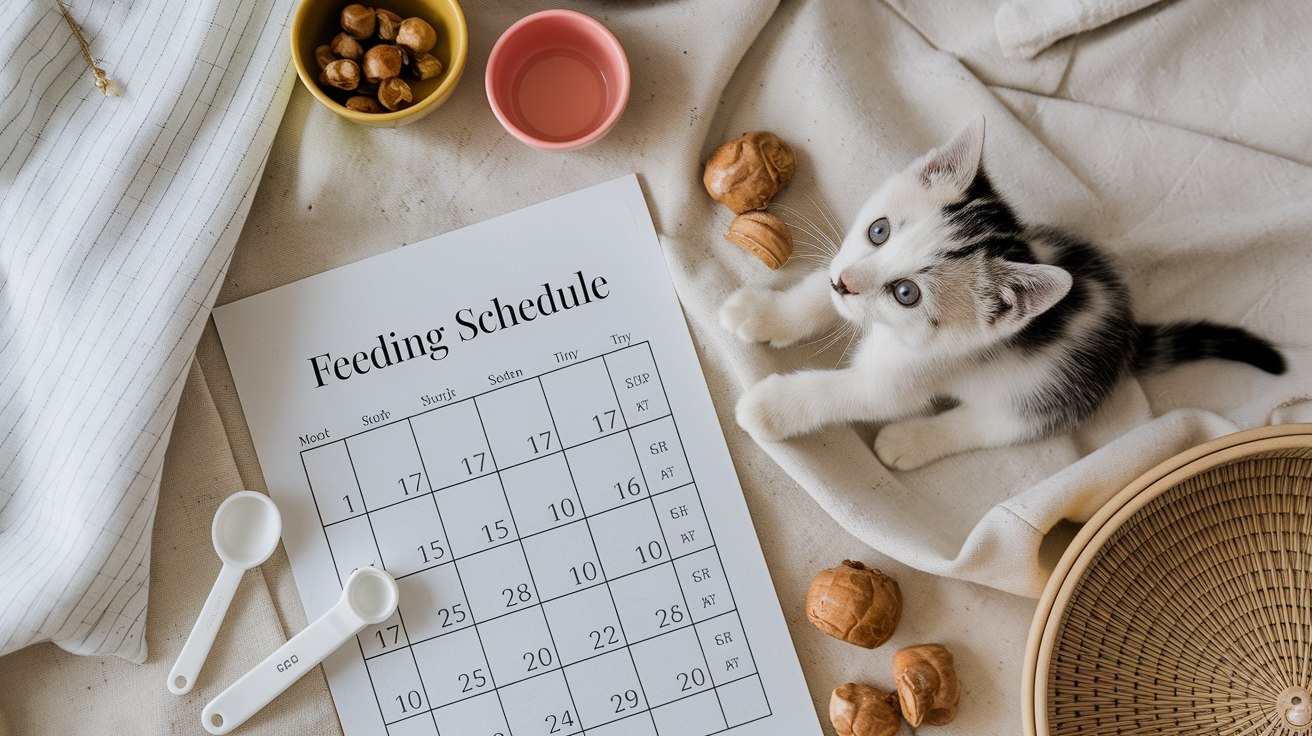
Kitten feeding needs change fast. Really fast. A kitten’s body packs more growth into the first year than it ever will again, and the menu has to keep pace. In just a few months, you’ll go from tiny feedings every couple hours to regular meals that look a lot like an adult cat’s routine.
The shift from milk to solid food doesn’t happen all at once either. It rolls out in stages, each with its own rhythm for how often to feed and how much to put in the bowl. Here’s the full picture at a glance, so you know exactly where your kitten stands right now.
| Age Range | Food Type | Frequency | Amount per Feeding |
|---|---|---|---|
| 0-4 weeks | Mother’s milk or KMR (kitten milk replacer) | Every 2-5 hours (varies by week) | 1-3 teaspoons, increasing with age |
| 4-8 weeks | Gruel, transitioning to moistened dry or wet food | 4-5 times/day, then 3-4 times/day | 1/4-1/2 cup moistened dry or 1/2-1.5 cans wet |
| 8-12 weeks | Solid kitten food (wet and/or dry) | 3-4 meals/day | About 1/2 cup dry or 3 oz wet per day |
| 3-6 months | Kitten-formula wet and dry food | 3 meals/day, shifting to 2 by 6 months | Varies by weight, roughly 250-280 kcal/day |
| 6-12 months | Kitten food, gradually mixed with adult food | 2 meals/day | Increasing adult-food ratio over time |
| 12+ months | Adult cat food (large breeds may stay on kitten food until 18-24 months) | 2 meals/day | About 1 cup dry per day, label-dependent |
As a general rule, growing kittens need roughly 60 to 65 calories per pound of body weight each day. That’s about double what an adult cat needs, which makes sense when you think about how much building their little bodies are doing.
Keep this chart handy for a quick check, but each stage below goes deeper into what to do, what to watch for, and when to call your vet.
How Often Should Newborn Kittens Be Fed (0–4 Weeks)?
(((alt-img2)))
If the mother cat is present and healthy, nursing is the best option, hands down. Her milk delivers colostrum in the first 24 to 48 hours, packed with antibodies that newborn kittens can’t get anywhere else. This early milk is a one-time window. If a kitten misses it, their immune system starts off at a real disadvantage.
When nursing isn’t possible, bottle-feeding with a commercial kitten milk replacer (KMR) steps in. Never use cow’s milk. It sounds harmless, but it causes diarrhea and stomach upset in kittens who can’t digest it properly. Dilute the KMR roughly 1:2 with water, and warm it to 98 to 102°F. Test it on your wrist first, like you would with a baby bottle. It should feel warm, not hot. In the first two weeks, kittens need about 20 to 26 kcal per 100 grams of body weight daily, fed in small amounts of 1 to 3 teaspoons every 2 to 3 hours, including overnight. Yes, that means setting an alarm. It’s a lot, I know, but this stage doesn’t last long.
A few care reminders specific to this age:
- Overnight feedings are not optional. Newborns can’t go long stretches without food.
- Kittens under 3 weeks can’t eliminate on their own. Gently stimulate the genital area with a warm, damp cloth after each feeding to help them go.
- Get the dilution and temperature right every time. Too strong or too hot can upset their stomach or cause burns.
- Weigh daily. A gain of at least 10 to 14 grams (about a third of an ounce) per day is the target.
- Never substitute cow’s milk or human baby formula. KMR is formulated specifically for kitten nutrition.
If a kitten isn’t gaining weight or seems weak and unresponsive, don’t wait it out. Call a vet the same day.
What Should Kittens Eat During Weaning (4–8 Weeks)?
(((alt-img3)))
Around 3 to 4 weeks, you’ll start noticing signs a kitten is ready to wean. Little teeth start coming in, they get curious about the mother’s food bowl, and they’re steadier on their feet instead of wobbling around. These are your cues to start the transition.
Here’s how the shift from milk to solid food typically rolls out:
- Gruel introduction. Mix 1 part kitten milk replacer with 3 to 4 parts warm water, then blend it with canned kitten food until it’s a soupy, easy to lap consistency. Offer it in a shallow dish.
- Reducing formula. Around week 5, start cutting back on the amount of formula in the mix. Introduce dry kibble soaked in water for a softer texture, and set out a water bowl for the first time.
- Adding dry kibble. Over weeks 6 and 7, gradually increase the ratio of solid kitten food while decreasing the milk replacer further. Think of it like dimming a light slowly instead of flipping a switch.
- Full transition to solids. By 8 weeks, most kittens are fully weaned and eating solid kitten food on their own
Final Words
Kittens’ feeding needs change fast — from round-the-clock bottle feeds in the first weeks to a few solid meals a day by 6–12 months. That shift guides how often, what, and how much you offer.
You now have the quick-reference chart, newborn care tips, a step-by-step weaning plan, and the 8–12 week schedule with portion examples. Use the kitten feeding schedule by age as a simple starting plan, tweak it for your kitten’s weight and appetite, and call your vet if growth or eating worries come up.
Stick with the routine, and your kitten will grow healthy and confident.
FAQ
Q: How many hours to feed a kitten?
A: How often to feed a kitten depends on age: newborns every 2–3 hours; 2–4 weeks every 4–5 hours; 4–8 weeks 4–6 feedings daily; 8–12 weeks 3–4 meals; 3–6 months about 3 meals.
Q: What to feed a 6 month old kitten?
A: A 6-month-old kitten should eat a complete kitten-formula diet (high-protein wet or dry) in about 2–3 meals daily, with portions adjusted for weight and activity; wait until 10–12 months before adult food.
Q: When can kittens eat wet food?
A: Kittens can eat wet food starting about 3–4 weeks during weaning; begin by mixing canned kitten food with formula, gradually increasing solids so they’re fully on wet/solid food by around 8 weeks.
Q: What is the best feeding schedule for a 2-month-old kitten?
A: The best feeding schedule for a 2-month-old kitten is 3–4 meals a day, spaced every 6–8 hours, using complete kitten food and adjusting portions to support steady growth and healthy weight gain.
More from Politics
 Training
Teach a Dog to Walk on a Loose Leash Indoors
 Health
Cat Not Eating Checklist: Quick Troubleshooting Steps
 Pet Products
Self-Cleaning Litter Box vs Manual: Which Wins?
 Pet Lifestyle