Pet Care
Daily Enrichment Routine for Indoor Cats: Happy Timelines
Your cat isn't lazy, just under-stimulated. Try this simple daily enrichment routine for indoor cats, five quick slots tied to your own schedule.
What if your indoor cat is bored, not lazy?
Try one 5-minute play session this morning and you’ll see a difference.
Most people think indoor cats just nap, but small, timed moments of play, foraging, and rest change behavior, weight, and mood.
This post gives a simple morning-to-night routine with five easy slots you can tie to your coffee or bedtime.
Start with the minimum version and build up; consistency beats perfect timing.
Read on to get the exact schedule and quick tips to make it stick.
A Practical Morning-to-Night Enrichment Schedule for Indoor Cats
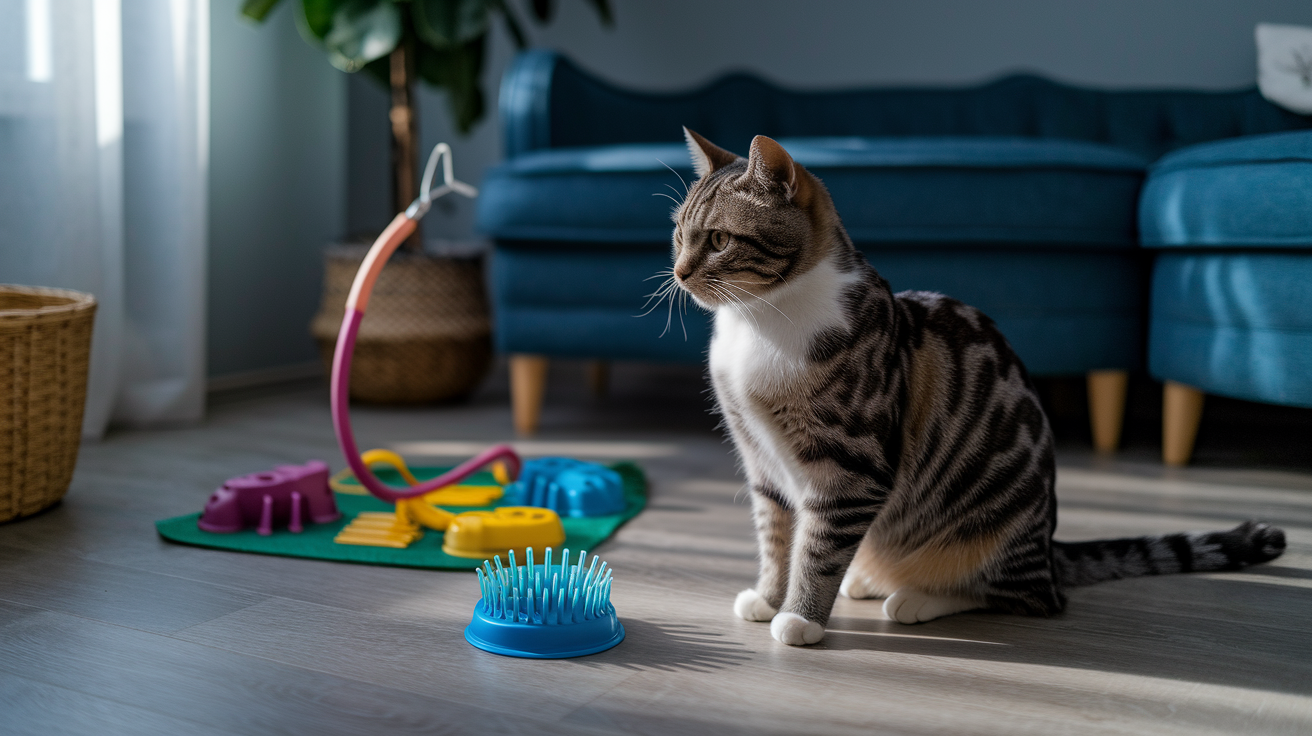
You don’t have to hit these times on the dot. Your cat doesn’t own a clock, and your schedule probably shifts day to day anyway. What matters more than the exact minute is the rhythm: play, then food, then rest, repeated in a pattern your cat starts to expect.
Think of this as a starting template, not a rulebook. If the full version feels like too much right now, start with 5 minutes of play and build from there.
| Time | Duration | Enrichment Activity | Owner Action | Purpose |
|---|---|---|---|---|
| Early morning | 5-10 minutes | Wand or feather toy play | Move the toy like prey, low and quick | Burn morning energy before food |
| Breakfast | 5-10 minutes | Puzzle-fed meal | Load a puzzle feeder instead of a bowl | Mimic the work of catching food |
| Midday | 20-40 minutes | Window perch time, hidden food | Set up a perch and scatter a few pieces of kibble | Independent stimulation while you’re busy |
| Early evening | 10-15 minutes | Hunting-style play, then dinner | Rotate in a fresh toy, then serve dinner | Replicate hunt, catch, eat sequence |
| Bedtime | 5-10 minutes | Short play, grooming, calm wind-down | Dim lights, brush briefly, keep tone quiet | Signal it’s time to settle for the night |
Puzzle feeders and timed feeders can cover both the breakfast and midday slots nicely. There’s more detail on setting those up later in this guide.
Try attaching these five moments to things you already do, like your own coffee or your evening scroll through your phone. It makes the whole schedule easier to stick with, and the consistency section further down covers exactly how to build that habit. For more structured ideas, Indoor cat enrichment ideas can help you combine food, environment, and sensory play into these short morning and evening windows.
Indoor Cat Play Sessions That Imitate Hunting

A satisfying play session follows a pattern your cat’s brain already knows: stalk, chase, pounce, catch, eat. Skipping the catch part is one of the most common reasons play feels unfinished to a cat, even after ten minutes of chasing. Keep the wand toy low to the ground, moving it like something trying to hide, not something trying to show off. Pause it behind a chair leg or under the edge of a rug for a second or two. Let your cat actually catch it every few minutes. That pause and catch rhythm is what turns random toy waving into something that feels like real hunting.
Different toys call for different handling. Wand and feather toys work best with that slow, low, prey-like movement described above. Rolling balls and chase toys are great for cats who like to run, and you can toss them across the floor to trigger a chase instinct. Laser pointers are fine in moderation, but the light itself can never be caught, which can leave a cat keyed up with nowhere to put that energy. If you use one, always finish the session by tossing a real toy or a small treat for your cat to physically catch and “eat.” And never point it toward your cat’s eyes, even by accident.
Stay close during any session involving string, feathers, or small attachable parts. These pieces can come loose during an enthusiastic pounce, and a cat left alone with them afterward is at risk of chewing or swallowing something they shouldn’t. Full guidance on inspecting toys and storing them safely between sessions is covered later in this guide, but the short version for now is simple: supervise while it’s out, put it away when you’re done.
Puzzle Feeders and Foraging in an Indoor Cat Routine
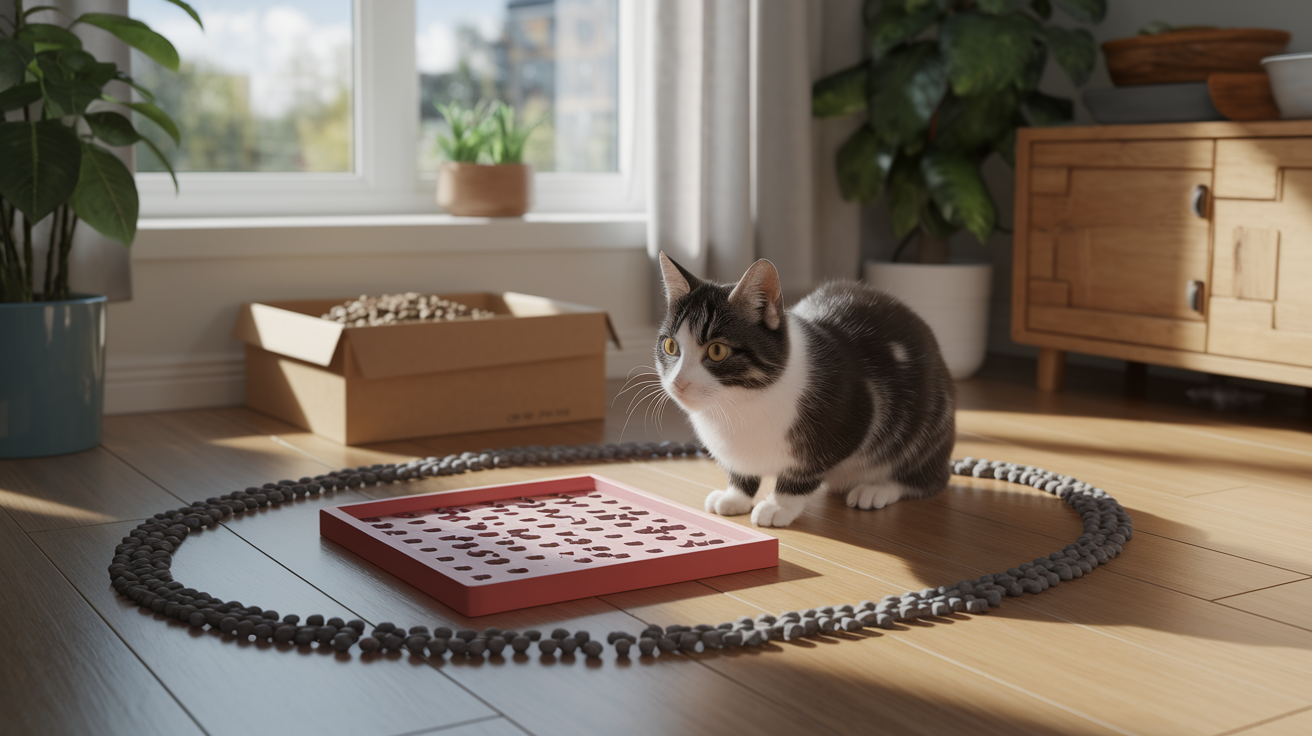
A play session followed by a puzzle-fed meal recreates something close to a real hunt. Your cat works for the toy, “catches” it, and then gets to work again for food. That closes out the stalk-catch-eat-rest cycle in a way a bowl of free food never will. If you’re new to puzzle feeders, start simple. Beginner options have food sitting right out in the open on a textured surface, so your cat succeeds almost immediately. From there you can move to rolling dispensers that release kibble as they’re batted around, and eventually to covered compartment puzzles that take real problem-solving to open. The goal at every stage is early, frequent success, not frustration.
Scatter feeding is an easy complement to puzzle feeders and costs nothing extra. Hide small measured portions of kibble in 5 to 10 safe spots around the house, like the base of a cat tree, the flat top of a scratching post, a window perch, or even a clean, empty cardboard box. It turns a few minutes before you leave for work into a mini scavenger hunt that keeps your cat occupied well after you’re out the door.
Here’s the part that matters most for weight management: everything that goes into a puzzle or a hiding spot counts as part of your cat’s daily food, not extra. A reasonable approach is setting aside 25 to 50 percent of the day’s measured kibble allowance specifically for puzzles and scatter spots, then serving the rest as a normal meal. This keeps mental stimulation high without quietly doubling your cat’s calories, which is an easy mistake to make.
Final Words
Start your day with a short wand session, a puzzle-fed breakfast, midday foraging and an evening hunting-style play — that’s the practical morning-to-night plan you can copy and adjust. We covered short prey-style play, safe toy handling, and how puzzle feeders and timed feeders fit into real life.
Aim for 2–4 quick play sessions adding up to 20–40 minutes, attach activities to habits you already have, and start with 5 minutes if needed. Try this for a week to build a steady daily enrichment routine for indoor cats — small steps add up to big gains.
FAQ
Q: What is the 3-3-3 rule for cats?
A: The 3-3-3 rule for cats is a simple timeline for settling into a new home: 3 days to acclimate and hide, 3 weeks to explore and relax, and about 3 months to fully adjust and bond.
Q: What is the best enrichment for indoor cats?
A: The best enrichment for indoor cats is short, interactive hunting play combined with puzzle feeders: wand sessions, chase games, and food-dispensing toys that mimic hunt-catch-eat cycles and boost activity.
Q: Which gender of cat is more cuddly?
A: Gender doesn’t reliably predict which cat is more cuddly; personality, early socialization, and individual preference matter more—meet the cat and watch their behavior to see how affectionate they are.
Q: What does cat splooting mean?
A: Cat splooting means the cat is lying with its back legs stretched out behind them—usually a relaxed, cooling, or stretching posture; contact your vet if it comes with pain, stiffness, or sudden changes.
More from Politics
 Training
Teach a Dog to Walk on a Loose Leash Indoors
 Health
Cat Not Eating Checklist: Quick Troubleshooting Steps
 Pet Products
Self-Cleaning Litter Box vs Manual: Which Wins?
 Pet Lifestyle